The Legalization Backlash: Why Your State Would possibly Repeal Authorized Hashish in 2026
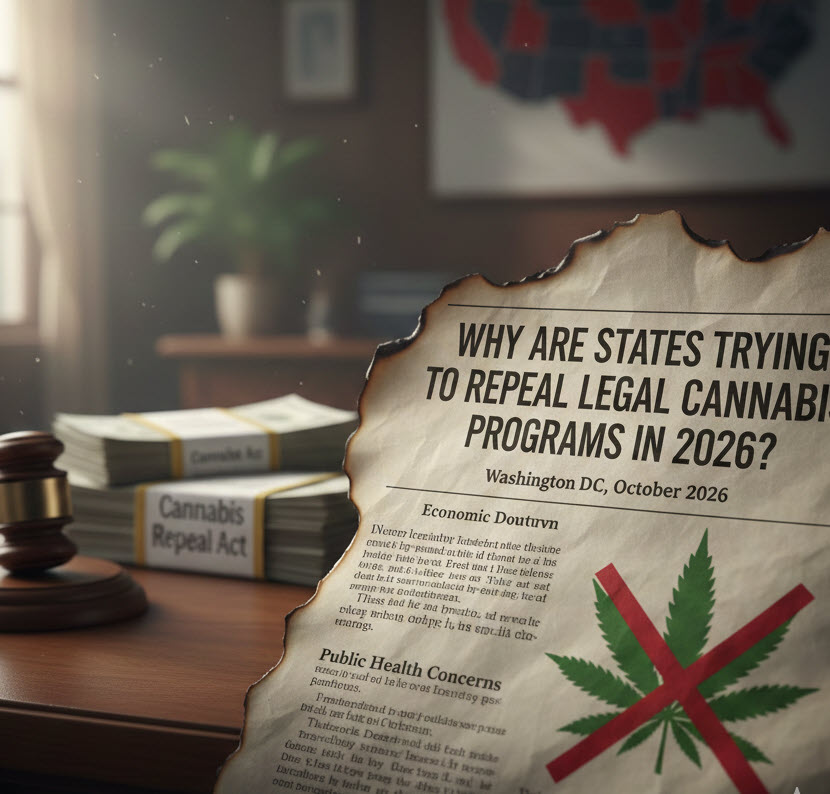
Simply whenever you thought the hashish legalization prepare was unstoppable, actuality is about to slap you within the face. In keeping with a latest Vice article, a number of states are contemplating repealing their authorized hashish markets in 2026. That is proper—not simply pausing enlargement, not simply including extra laws, however truly rolling again legalization completely and returning to prohibition.
Should you’ve been celebrating legalization as a accomplished deal, as inevitable progress that may’t be reversed, you have to get up. Hashish legalization is fragile, it is beneath assault, and the forces pushing for repeal are highly effective, well-funded, and lethal critical.
Let me break down what’s occurring, who’s behind it, and why hashish lovers want to know that legalization means completely nothing till hashish is absolutely descheduled federally and now we have actual, everlasting protections for shoppers’ rights to buy, produce, and promote.
The Repeal Motion Is Actual
A number of states with current authorized hashish markets are dealing with critical repeal efforts heading into 2026. We’re not speaking about states that rejected legalization—we’re speaking about states that legalized, applied markets, generated tax income, and are actually being pressured to undo all of it.
The pushback is coming from a number of instructions:
Conservative Political Teams: Organizations that by no means accepted legalization within the first place are utilizing each instrument at their disposal to reverse it. They’re funding poll initiatives, lobbying state legislators, and operating fear-based campaigns about “the hazards of authorized weed.”
Some Regulation Enforcement Organizations: Regardless of knowledge displaying that legalization would not improve crime and really frees up sources for critical offenses, some legislation enforcement teams proceed pushing prohibition narratives. Why? Comply with the cash—drug warfare funding, asset forfeiture, and institutional inertia.
“Involved Father or mother” Teams: Typically funded by pharmaceutical corporations and different pursuits with pores and skin within the recreation, these teams push narratives about defending youngsters whereas ignoring that authorized, regulated markets are much better at stopping youth entry than black markets.
Some Medical Professionals: Often citing cherry-picked or misinterpreted knowledge about “hashish harms,” conveniently ignoring the far larger harms of alcohol or pharmaceutical options.
The arguments they’re utilizing are acquainted: hashish is just too potent now, it is inflicting psychological well being crises, it is resulting in impaired driving, it is harming youngsters, the markets are “uncontrolled,” and many others. By no means thoughts that the info would not assist most of those claims. By no means thoughts that prohibition demonstrably failed for many years. The repeal motion is not about info—it is about energy and cash.
Who’s Actually Behind the Repeal Push
Let’s speak about who truly advantages from hashish prohibition and why they’re combating so laborious to revive it.
Huge Pharma: The pharmaceutical trade loses roughly $10 billion yearly in states with authorized medical hashish. Each one that chooses hashish for ache administration, nervousness, insomnia, or different situations is an individual not shopping for their tablets. Pharmaceutical corporations have a direct monetary curiosity in conserving hashish unlawful or so closely restricted that they management the market.
They do not fund repeal campaigns immediately—that may be too apparent. As an alternative, they funnel cash by “involved citizen” teams, medical associations, and advocacy organizations that do their soiled work whereas sustaining believable deniability.
Personal Jail Business: Authorized hashish means fewer arrests, fewer prisoners, and fewer revenue for personal jail corporations. The jail trade has lobbied towards hashish reform for many years and continues to fund opposition efforts by PACs and political donations.
Alcohol Business: Whereas some alcohol corporations have began investing in hashish, many nonetheless view it as a direct competitor. When individuals select hashish over alcohol (which they more and more do), alcohol gross sales drop. The trade has a vested curiosity in limiting hashish entry.
Some Regulation Enforcement Companies: Not all legislation enforcement opposes legalization—many departments assist it or are impartial. However some businesses profit from prohibition by federal drug warfare funding, asset forfeiture packages, and institutional constructions constructed across the drug warfare. Ending prohibition threatens their budgets and justifications for sure packages.
Pharmaceutical-Funded Medical Organizations: Many medical teams that oppose hashish legalization obtain vital funding from pharmaceutical corporations. Their “medical issues” usually align suspiciously properly with their funders’ monetary pursuits.
Conservative Political Organizations: Some genuinely ideological, others funded by the pursuits listed above. They supply the political muscle and grassroots organizing to show company pursuits into repeal actions.
What Repeal Would Truly Imply
If states efficiently repeal their authorized hashish markets, this is what occurs:
Hundreds of Jobs Misplaced: Authorized hashish industries make use of tens of hundreds of individuals in every state—budtenders, growers, processors, supply drivers, compliance officers, testing lab employees, and numerous ancillary companies. Repeal means all these hashish jobs disappear in a single day.
Tax Income Evaporates: States have develop into depending on hashish tax income, producing a whole lot of thousands and thousands of {dollars} yearly. That cash funds colleges, drug therapy packages, legislation enforcement, and infrastructure. Repeal means these income streams disappear, forcing funds cuts or tax will increase elsewhere.
Black Market Returns: Does anybody truly consider that repealing authorized markets will make hashish go away? The demand would not disappear—it simply strikes again to unregulated black markets the place merchandise aren’t examined, sellers do not test IDs, and felony organizations revenue as an alternative of taxpaying companies.
Arrests Resume: Essentially the most tragic consequence—individuals return to being arrested, prosecuted, and incarcerated for possessing a plant. Lives get destroyed, households get torn aside, and communities get devastated, notably minority communities which might be disproportionately focused by drug enforcement.
Medical Sufferers Undergo: Individuals utilizing hashish for authentic medical situations lose authorized entry. They’re compelled to both break the legislation or return to pharmaceutical options which might be usually much less efficient and extra harmful.
Why State-Degree Legalization Was By no means Sufficient
This is the uncomfortable reality that too many hashish advocates do not wish to acknowledge: state-level legalization with out federal descheduling is constructed on sand. It may be washed away with a single election, a poll initiative, or a legislature that decides prohibition was higher in any case.
So long as hashish stays federally prohibited—and particularly so long as it is within the Managed Substances Act—state-level legalization is weak:
Federal Preemption: The federal authorities can, at any time, determine to implement federal prohibition in authorized states. We have been fortunate that the majority latest administrations selected to not, however that is coverage, not legislation. Coverage modifications with elections.
Banking and Monetary Providers: Hashish companies cannot entry regular banking as a result of banks are federally regulated. This creates safety dangers, limits development, and makes authentic companies function like felony enterprises.
Interstate Commerce: You possibly can’t transfer hashish throughout state traces, even between two authorized states, as a result of crossing state traces triggers federal jurisdiction. This prevents economies of scale and market effectivity.
Tax Discrimination: Part 280E of the tax code prevents hashish companies from regular tax deductions, crushing them with efficient tax charges as much as 80%. This is applicable no matter state legality as a result of hashish is federally prohibited.
Analysis Limitations: Federal Schedule I standing continues to limit analysis, limiting our understanding of hashish’s advantages and dangers. This permits prohibitionists to assert “we do not know sufficient about hashish” whereas sustaining the boundaries that forestall us from studying extra.
Vulnerability to Repeal: As we’re seeing now, state legalization could be reversed by motivated opposition teams, notably when federal prohibition gives legitimacy to anti-cannabis arguments.
The Solely Actual Answer: Federal Descheduling
Transferring hashish to Schedule III would not clear up these issues. Rescheduling to Schedule II would not both. The one answer that gives precise, lasting safety is full elimination from the Managed Substances Act—descheduling.
This is what federal descheduling would accomplish:
Everlasting Authorized Standing: Hashish can be handled like alcohol or tobacco—regulated however basically authorized. States might nonetheless regulate inside their borders, however they could not create felony penalties for easy possession with out violating federal legislation.
Banking Entry: Hashish companies might use regular banking and monetary providers, making operations safer and extra environment friendly.
Interstate Commerce: Companies might function throughout state traces, permitting for economies of scale and market improvement.
Tax Equity: Part 280E would now not apply, permitting hashish companies regular tax deductions like some other trade.
Analysis Freedom: Scientists might research hashish with out DEA permission and regulatory boundaries, accelerating our understanding of the plant’s properties.
Federal Safety: State repeal efforts can be meaningless for particular person possession and use rights, simply as states cannot criminalize alcohol possession even when they needed to.
Finish to Federal Prosecution: No extra federal hashish arrests, prosecutions, or imprisonments. The federal warfare on hashish customers can be over.
Why You Should not Rejoice But
Each time a state legalizes hashish, we see celebrations, victory laps, and proclamations that prohibition is over. However prohibition is not over till it is over federally, and even state-level legalization is more and more beneath menace.
The hashish group wants to know that legalization will not be a accomplished deal. It is not inevitable. And with out federal descheduling, each state-level victory is weak to reversal.
We have to cease appearing like we have gained after we’ve barely established a beachhead. The forces opposing hashish legalization have not given up—they’ve regrouped, developed new methods, and are actively working to roll again the features we have made.
Celebrating state legalization whereas hashish stays within the Managed Substances Act is like celebrating successful the primary quarter when you’re nonetheless dropping the sport.
What Must Occur
If we would like everlasting, protected hashish legalization, this is what has to occur:
Federal Descheduling: Full elimination from the Managed Substances Act. Not Schedule III. Not Schedule II. Off the schedule completely.
Shopper Rights Safety: Federal legislation defending people’ proper to own, buy, and develop hashish for private use, no matter state legal guidelines.
Interstate Commerce: Clear federal framework permitting hashish companies to function throughout state traces.
Expungement: Computerized expungement of all federal hashish convictions and federal incentives for states to do the identical.
Social Fairness Packages: Actual funding in communities destroyed by the Struggle on Medicine, not token packages that get defunded or ignored.
Banking Reform: Specific federal protections for hashish companies to entry banking, insurance coverage, and monetary providers.
Analysis Funding: Federal funding for hashish analysis to interchange the a long time of information suppressed by prohibition.
Something lower than this leaves hashish legalization weak to repeal, federal interference, and continued prohibition by one other title.
The Sticky Backside Line
States are significantly contemplating repealing their authorized hashish markets in 2026. This is not hypothetical—it is occurring. The repeal motion is funded by pharmaceutical corporations, non-public prisons, and different pursuits that revenue from prohibition. They’re utilizing the identical drained fear-based arguments that did not work earlier than, however in at present’s political local weather, they may succeed.
The elemental drawback is that state-level legalization with out federal descheduling is inherently unstable. So long as hashish stays within the Managed Substances Act, state legalization could be rolled again with a poll initiative or a change in state authorities.
Hashish lovers have to cease celebrating half-measures and demand what we really need: full federal descheduling. Not Schedule III. Not “medical marijuana packages.” Not “decriminalization.” Full descheduling with federal protections for particular person rights to own, buy, develop, and eat.
Till that occurs, each state-level legalization victory is momentary. Each authorized market is weak. Each celebration is untimely.
The repeal motion proves that prohibition advocates have not given up. They’re combating tougher than ever, they usually have deep pockets funding their efforts. The query is: are we able to battle again with the identical depth for actual, everlasting legalization?
As a result of something lower than federal descheduling means the battle is not over. It is simply getting began.
TRUMP TO RESCHEDULE WEED SOON, READ ON…